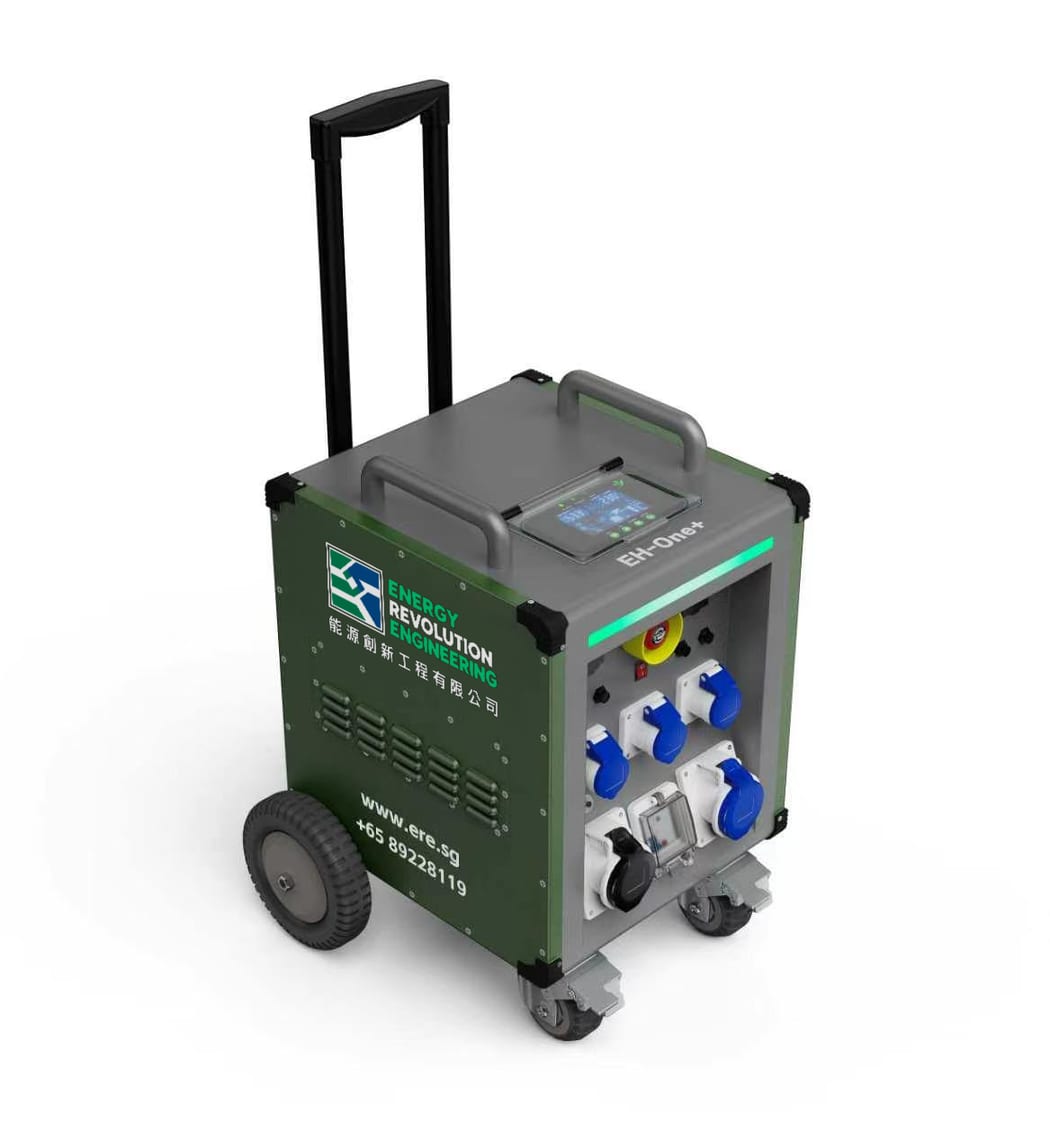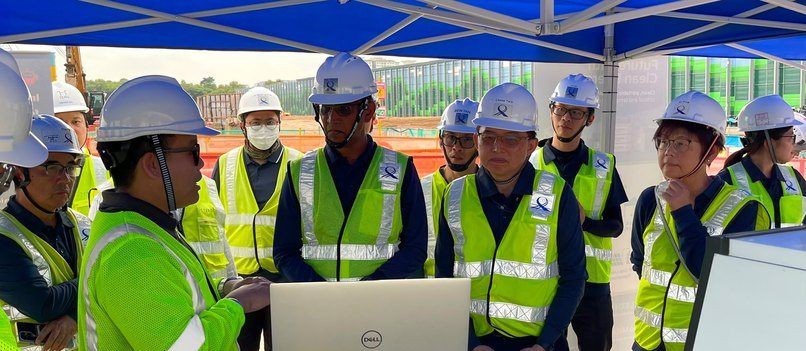
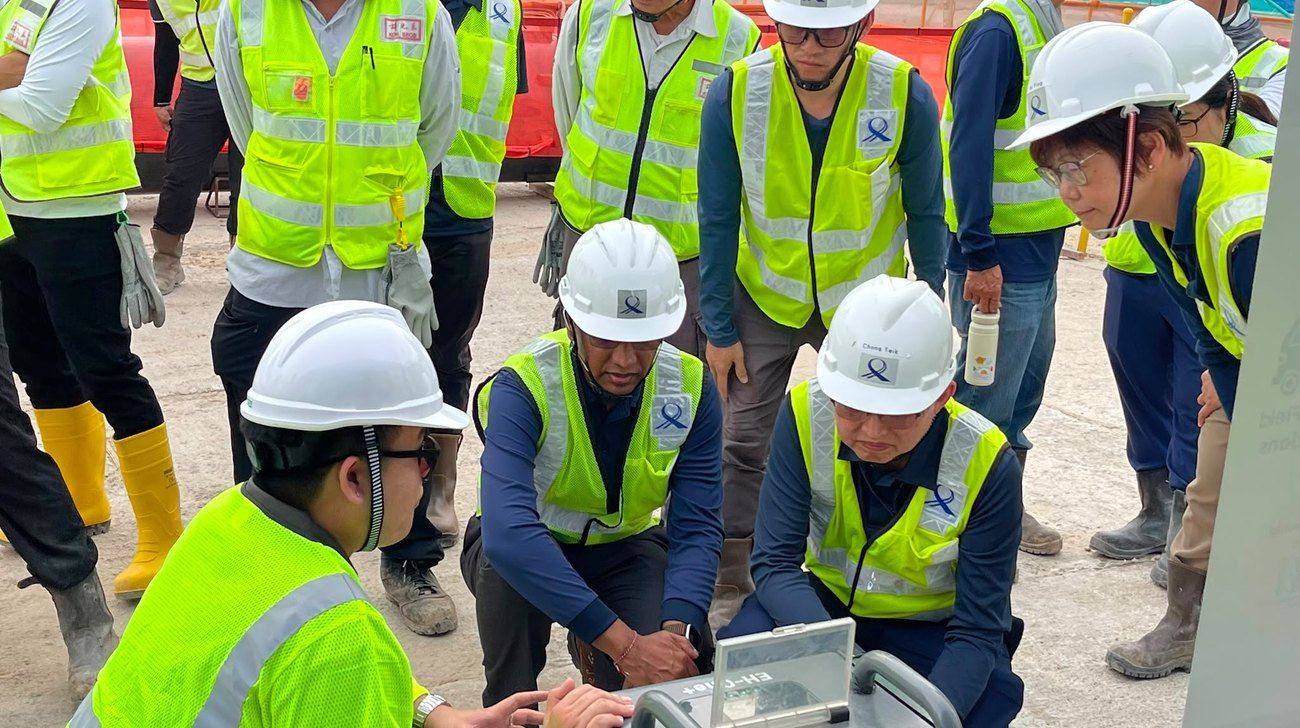
Trusted by the contractors and agencies building Singapore















- Whole-site hybrid
- 5 kWh to 500 kWh
- Grid, genset and solar ready
- Rental or purchase
If the work is small, spread out, temporary or noise sensitive, this is for you.
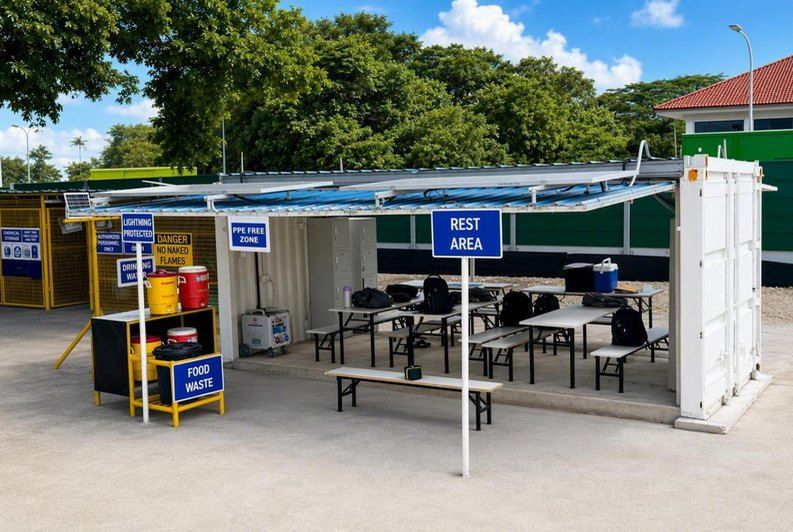
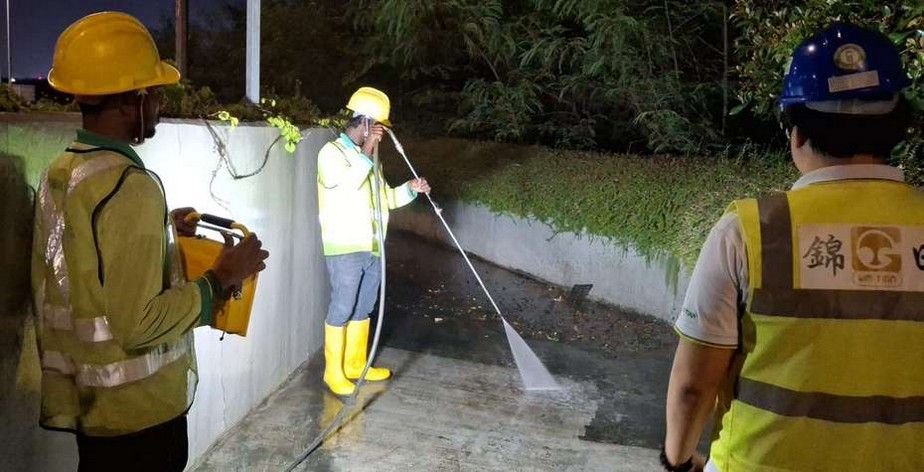
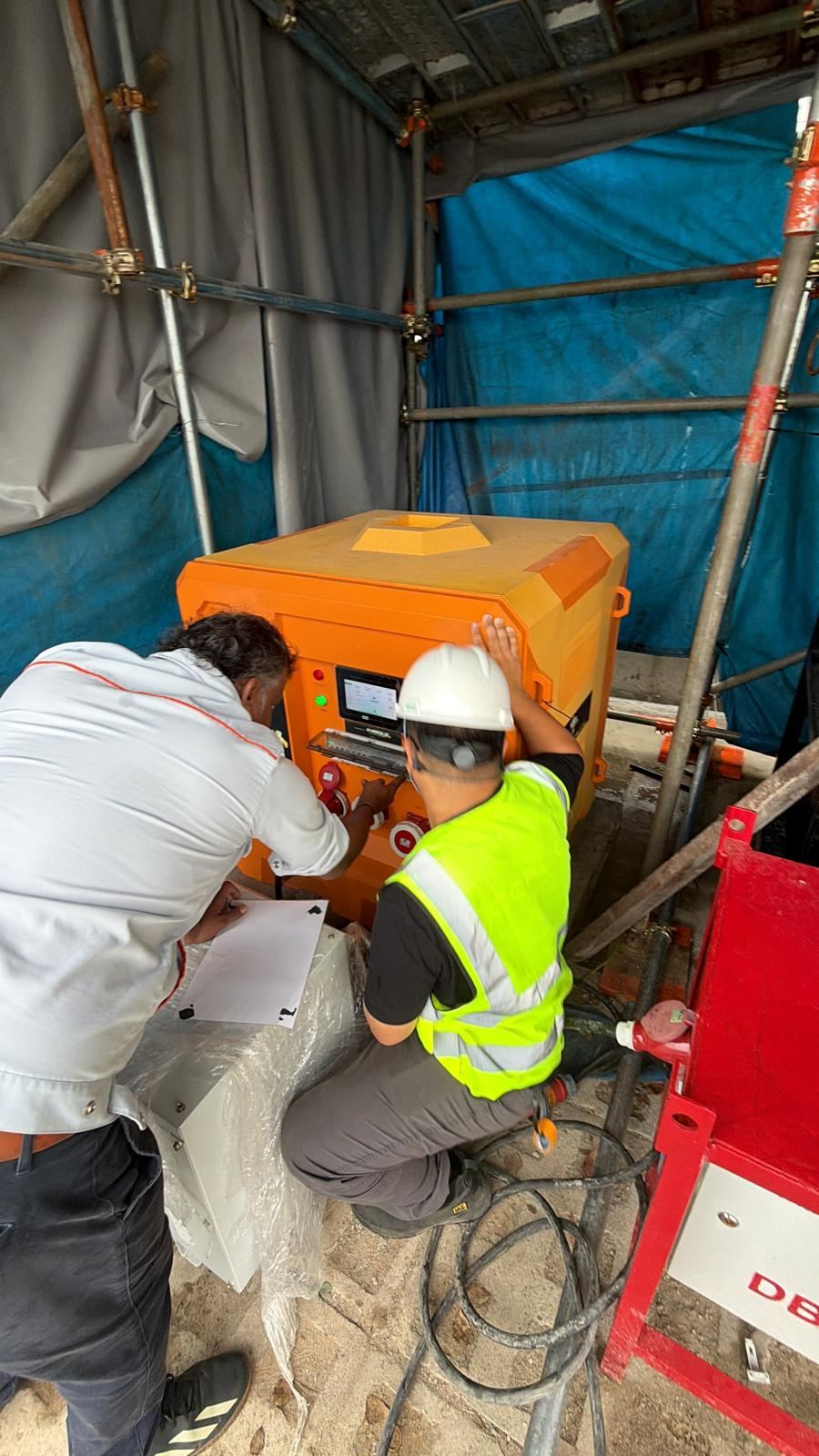
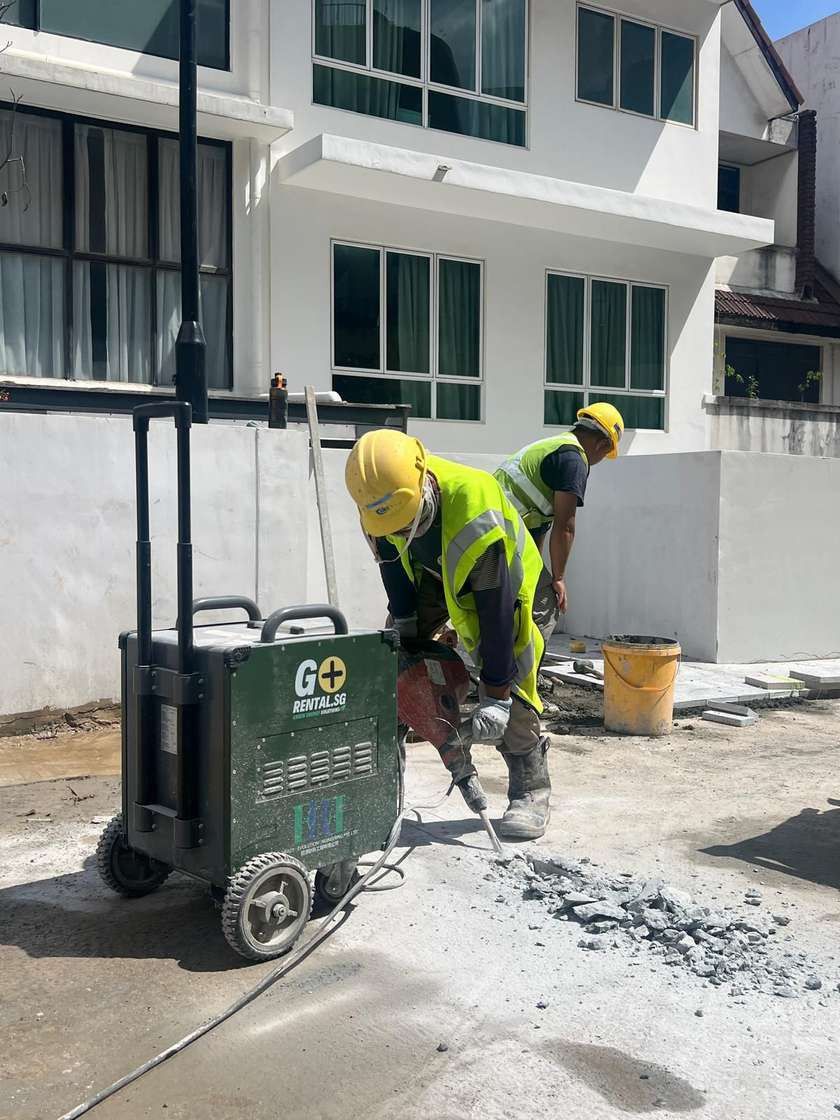
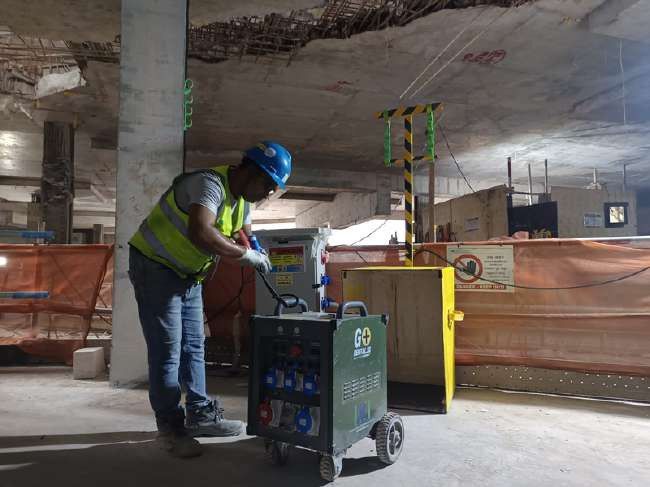
The generator stays. It just stops running all day.
Diesel genset
Runs for heavy load windows, and charges the battery while it is already running efficiently.
EH-Series BESS
Stores the energy and sits right next to the work zone, silent and emission free.
Everyday site loads
Site office, lighting, hand tools, testing, pumps and fans, through the day and the night.
When the battery units are charged and deployed, and the generator is not needed, it gets switched off. That is where the runtime and the fuel bill fall away.
Each source doing only what it is actually good at.
Most sites run diesel for everything, including the hours when diesel is at its worst. Move the right loads to battery and the generator runs less, burns less, costs less.
Best handled by diesel gensets
- High-load equipment and heavy site demand
- Peak load windows
- Charging larger battery units when required
Best handled by BESS
- Site offices, lighting, CCTV, pumps and fans
- Hand tools, testing and decentralised works
- Night works and low-load periods where noise matters
A typical hybrid site, over a working week
Indicative. Yours is sized from your actual load profile.Battery energy storage
Silent, emission free, instant. It takes the long, low, unglamorous loads that a generator should never have been running.
Grid supply
Where a supply exists, we use it properly: charging overnight on cheaper demand, and shaving the peaks that inflate your bill.
Diesel generation
Still the right answer for genuine peaks and long heavy plant duty. Kept, sized correctly, and run a fraction as often.
The generator does not leave your site on day one. It stops running for eighteen hours to deliver four hours of useful work. That single change is where most of the saving lives.
Size my site →Less generator runtime
When the battery units are charged and deployed for site works and the genset is not required, it can be switched off entirely.
Fewer cables across site
Power sits beside the work zone instead of being dragged from one distant source, cutting trip hazards and setup time.
Quieter, safer operations
No local fumes from the battery unit and lower noise exposure in residential, indoor or controlled areas.
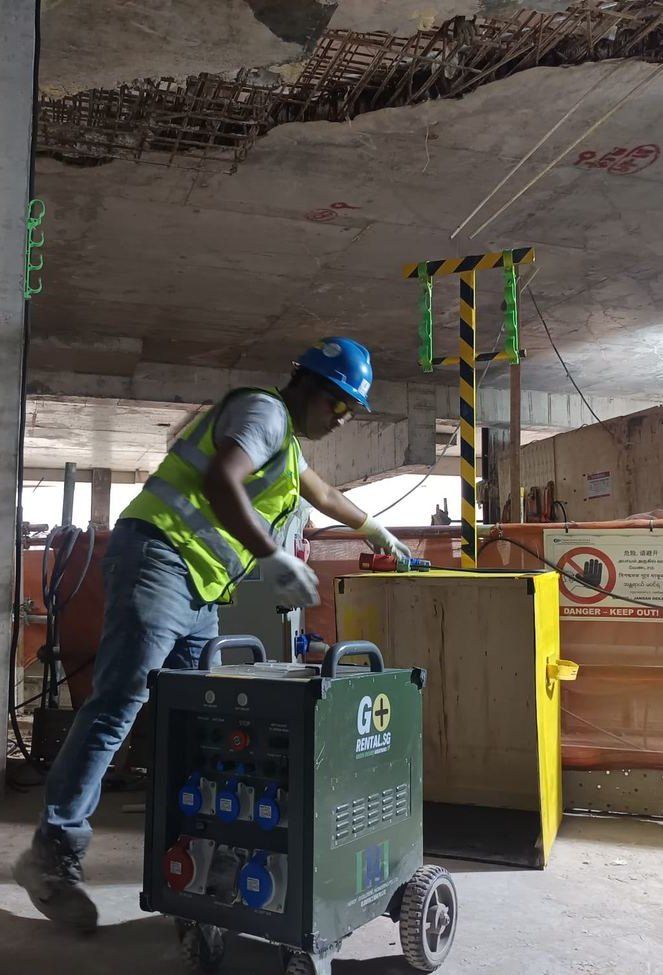
The expensive part was never the generator.
It was the cable. Long runs from one supply point, laid and protected and moved again next week, with an electrician booked before anyone can start.
- Trenching and reinstatement
- None
- Temporary distribution boards
- None
- Trip hazards through walkways
- Removed
- Waiting on an infrastructure upgrade
- Not required
The unit goes where the tools are. Basement, deck, tunnel, beside the gondola.
Diesel only, against hybrid with BESS.
| Diesel only | Hybrid with BESS | |
|---|---|---|
| Fuel burned on low loads | High | Far lower |
| Generator runtime | Long hours | Cut right back |
| Cable pulled across site | Up to 50 m | At the work face |
| Refuelling and disruption | Frequent | Rare |
| Total cost on a modelled site | Baseline | 40 to 70% less |
On a modelled six-storey site drawing about 60 kW for 10 hours a day, a hybrid EH-One+ and EH-Cube+ deployment came out roughly 40 to 50 per cent below the total cost of a 125 kVA diesel generator set, and avoided around 223 tonnes of CO₂ a year. On sites where the generator is badly oversized for the actual load, which is most of them, we have seen savings reach as high as 70 per cent. Your figures depend on your own load profile, which is exactly why we start with one.
A process you can put in a programme.
You are buying the integration, not the box.
- Step 01
Discovery
What you need to power, for how long, how often, and under what site constraints. A call, then a site visit where it matters.
- Step 02
Sizing and proposal
A written recommendation covering configuration, capacity, runtime, charging strategy, footprint and options. Clear enough to take to your own stakeholders without translating it.
- Step 03
Integration and build
Configured, assembled and tested at our facility. Documentation prepared alongside the build, not after it.
- Step 04
Delivery and commissioning
Positioned, connected, tested on load and signed off on site, with your operators trained before we leave.
- Step 05
Support
Local spares, servicing and engineering escalation. One number, and a team that already knows your configuration.
- Step 06
Scale
When the next project needs more, the same design and support model extends to it, backed by GoRental Global deployment capability.
One hand tool, or the whole development.
EH-Mini
- Usable capacity
- 5 kWh
- Continuous output
- 3.6 kW
Tools, lighting, communications and small-site operations.
Learn more →EH-One+
- Usable capacity
- 7.68 kWh
- Continuous output
- 6.2 kW
Events, mobile operations and temporary work areas.
Learn more →EH-Three
- Usable capacity
- 20 kWh
- Continuous output
- 15 kW
Food trucks and rooftop operations.
Learn more →EH-Cube
- Usable capacity
- 30 kWh
- Continuous output
- 15 kW
Industrial loads, backup power and extended-duration operations.
Learn more →EH-Container
- Usable capacity
- Up to 500 kWh
- Continuous output
- 100 to 500 kW
Large-scale industrial power, peak-demand management and site-wide energy support.
Learn more →Send us the load. We will send back the system.
An equipment list and a set of dates is enough. You get a real sizing answer from an engineer the same working day.
Thanks, there.
Your request is with our engineering team. You will hear back the same working day.